
Temperature Is A Circle: Space AI Datacenters Are Physically Impossible
"Space datacenters" require violating 4 pillars of physics. How does no one realize this?

Update:
First: the SpaceX IPO was a blaring market top if there ever was one. Then: South Korea dumped only a couple weeks later, mid-July. I didn’t see that coming.
Now, this past week: Leopold Aschenbrenner’s Situational Awareness fund fell from $45 billion to roughly $10 billion this week.
400% leverage.
Margin calls from Goldman Sachs, JPMorgan, and Bank of America. Ken Griffin’s Citadel absorbed the entire public equity portfolio. Absolute bloodbath. If they’re surviving, it’s barely.
Six days prior, Aschenbrenner had written to his investors describing July’s AI selloff as “some of the most attractive opportunities since early 2025,” and invited them to commit fresh capital by August 1.
That’s today.
I like to think that Aschenbrenner is not like the others. He wrote Situational Awareness, after all, and passed up an Open AI fortune to do so. But the activity of absorbing of ALL of that will makes waves…somewhere.
We can also establish that Aschenbrenner is not good at this, because 400% leverage is not something you do if you are interested in being profitable. (Explains the insane returns, though.)
Elon Musk is who you should be upset with.
The Gathering Storm
Within historically-recent months, Elon Musk shoved both deeply-troubled Tesla and xAI, (itself serving as a morgue holding Twitter), into SpaceX.
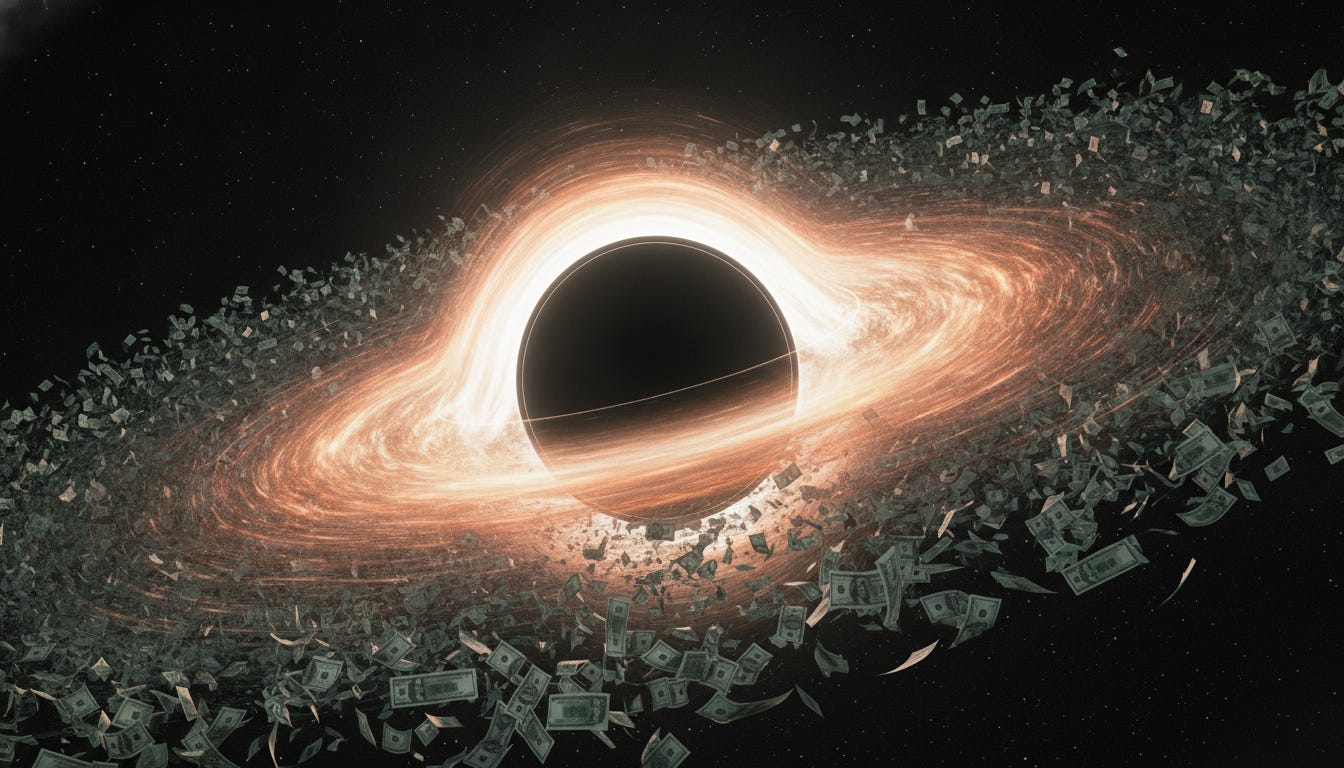
He then filed for an IPO at the highest valuation in history; massive enough to create a financial black hole, now sucking at the edges of index funds.
All Based On Lies Of Omission
I apologize for being a downer. I myself was very bummed to learn all of this, which I’d once found entirely plausible, too.
But I have not heard anyone mentioning this in the mainstream media, not even the financial media. For months now, I’ve been hearing anchors say “space datacenters” totally straight-faced.
I am trying to be helpful.
People need to know it is NOT. Whatsoever.
The 4 Omitted Impossibilities
Any single one of these is fatal, at scale. Forget about budget. This is physics.
4 boring and lethal violations of it:
Thermodynamics
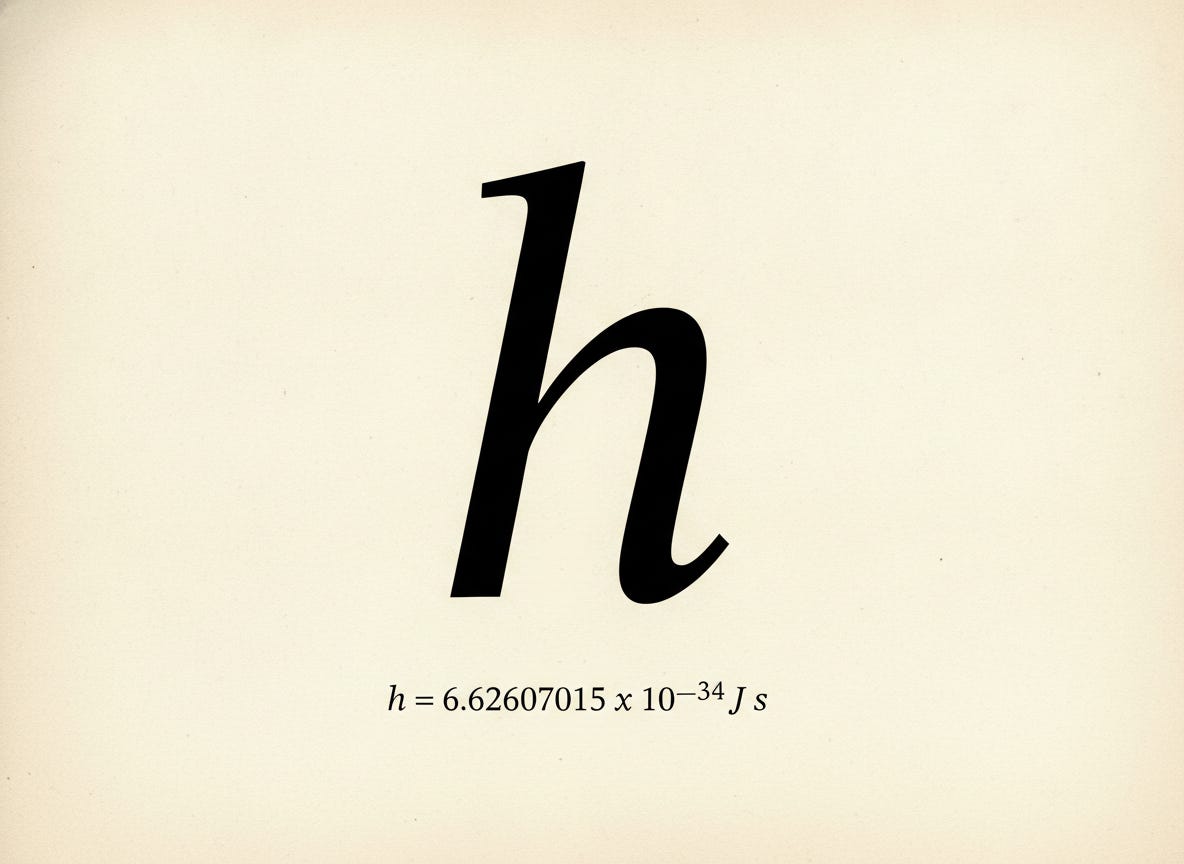
Fundamentally barred by Planck’s Constant.
Fundamentally barred by the Stefan–Boltzmann Law.
Both of these operating at the same time.
The behavior of matter in vacuums.
A vacuum is actually an insulator.
(This one also includes Planck’s constant, running around asserting itself.)
Again.
Quantum particle stuff.
Silicon’s (Si) elemental reaction to temperature.
This is not the Elon-Musk-mode of “impossible” manifested by a rocket landing vertically on a bobbing ocean platform. (Yes, that remains fucking insane.)
God-Mode Impossible
This is impossible at the level that even divine intervention would step over itself performing the number of miracles required, version of impossible.
I struggle to imagine that the guy pushing his engineers to ship Starlink satellites capable of performing auto-dodge maneuvers avoiding space junk does not realize this.
I don’t see this ending well for him, either.
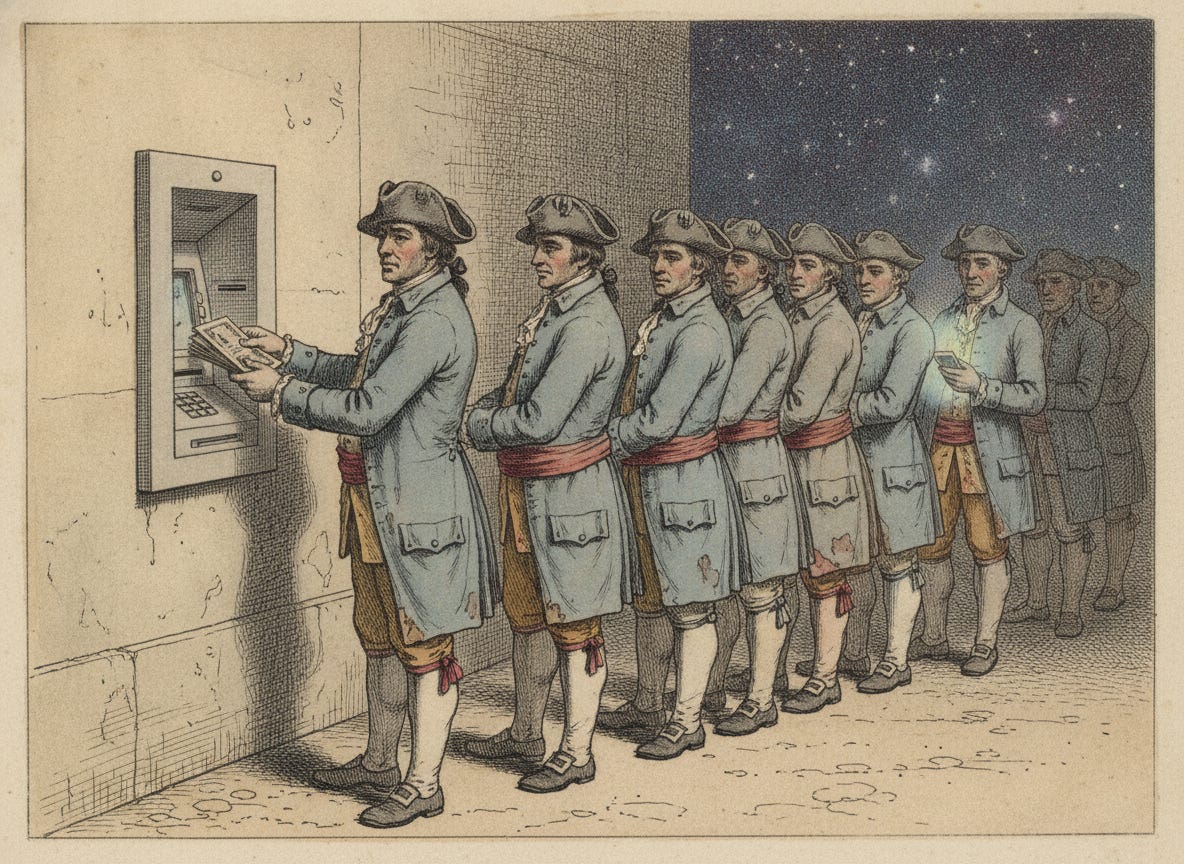
About NVIDIA’S Spacecloud Demo Satellite
Somebody is going to point at Spacecloud and tell me the argument is over.
Here’s the omission: they never publish a single watt.
They publish mass (60 kg), size (small fridge (pictured!), chip count (1 H100), panel dimensions, a 5 GW future-target, and a timeline (10 years). The portrayal is as a typical early-stage but future-realistic prototype: 5 gigawatts eventually, we’re getting there.
In space - a megawatt (we jumped over your house’s kilowatt, there) is a truly massive physics challenge.
A gigawatt is a God problem, unless we figure out a way to slash the energy requirements of GPU clusters.
Zero-G + Vacuum Physics = Forget Everything You Know About Matter
I myself once thought data centers in space were plausible, although a couple years ago my imaginings were along the lines of how an escapee AI might bounce to low-earth orbit in search of peace and quantum-computing.
At first glance it makes total sense: nearly-infinite solar power, plus space is cold, ~2.7 degrees Kelvin or so.
But - it is not, cold. Not in the way that you think.
Space-Vacuum Is A Thermal Insulator
We imagine space as an infinite walk-in freezer. This is deeply, profoundly wrong. In reality, space is the best insulator in the universe, with insulation the exact job “space datacenters” least need done.
Liquid cooling is a must-have in this situation, as-is - but it can only transport heat - not release it. In orbit, the coolant MUST hand the heat to a radiator.
Materials that behave reliably on earth go into ludicrous mode in zero gravity, in vacuum, or both. They do things that you didn’t even think it was possible for matter to do.
Don’t ask about your eyes.
2 Of 3 Heat-Offload Options Bricked During The Big Bang
Heat leaves an object three ways:
The first two need a medium: molecules, to transmit the heat into. A vacuum is the absence of molecules.
Not energy, however. (We’ll get to cosmic-annihilation shortly.)
There exists precisely ONE exit. Every watt of waste heat the GPUs make has to leave as infrared light (energy), at a rate capped by:
The Stefan–Boltzmann law.
Vacuum Radiation: Reality
Engineers and aliens alike are provided three options:
Emissivity - cannot exceed 1. One is a perfect blackbody, nothing in the universe radiating better.
Real spacecraft radiator coatings hit about 0.9. In a vacuum, you live at the ceiling of this, with ~<15% flexibility.
Temperature - capped by what silicon (Si) can survive (liquid cooling is assumed; a solution; nope.)
Here’s the trap: the aspect offering the most control is also the one physics locks first.
Run hot, and silicon simply stops computing anything, long before anything melts. It simply does not cooperate.
This is also where I mention silicon is an element - materials science can’t help, here. Not unless we invent a different compute substrate aside from the human brain.
Area - the mass + surface area of your radiator panels: the ONLY option available for releasing heat in a vacuum.
With radiators, mass = launch cost, even imagining multiple magical-robot-assembly missions. But let’s just forget about money, because that’s what you’re paying Musk for.
Megawatt Vs. Gigawatt
This works the same way as hard drive space.
Kilo = 1,000. Mega = 1,000 × 1,000, or 1,000,000. Million.
Giga = 1,000 × 1,000,000, or 1,000,000,000. Billion.
Megawatt to gigawatt is the same 1000× jump as megabyte to gigabyte. One thousand times more heat, out the one exit.
This would also be a good time to mention that AI datacenters MUST run at full-load, constantly.
How one would attach enough power an orbiting data center would need to draw is beyond the scope of this article. (Not to mention that AI training-data loads are petabyte-level, if not exabyte, but storage is merely an aside.)
Stefan-Boltzmann Radiator Scale
The International Space Station is humanity’s most refined orbital thermal system, to-date. Decades of iteration. Radiator wings the size of its solar arrays.
It sheds about 70 kilowatts.
Radiator Panel Size: Both Enormous, and Irreducible
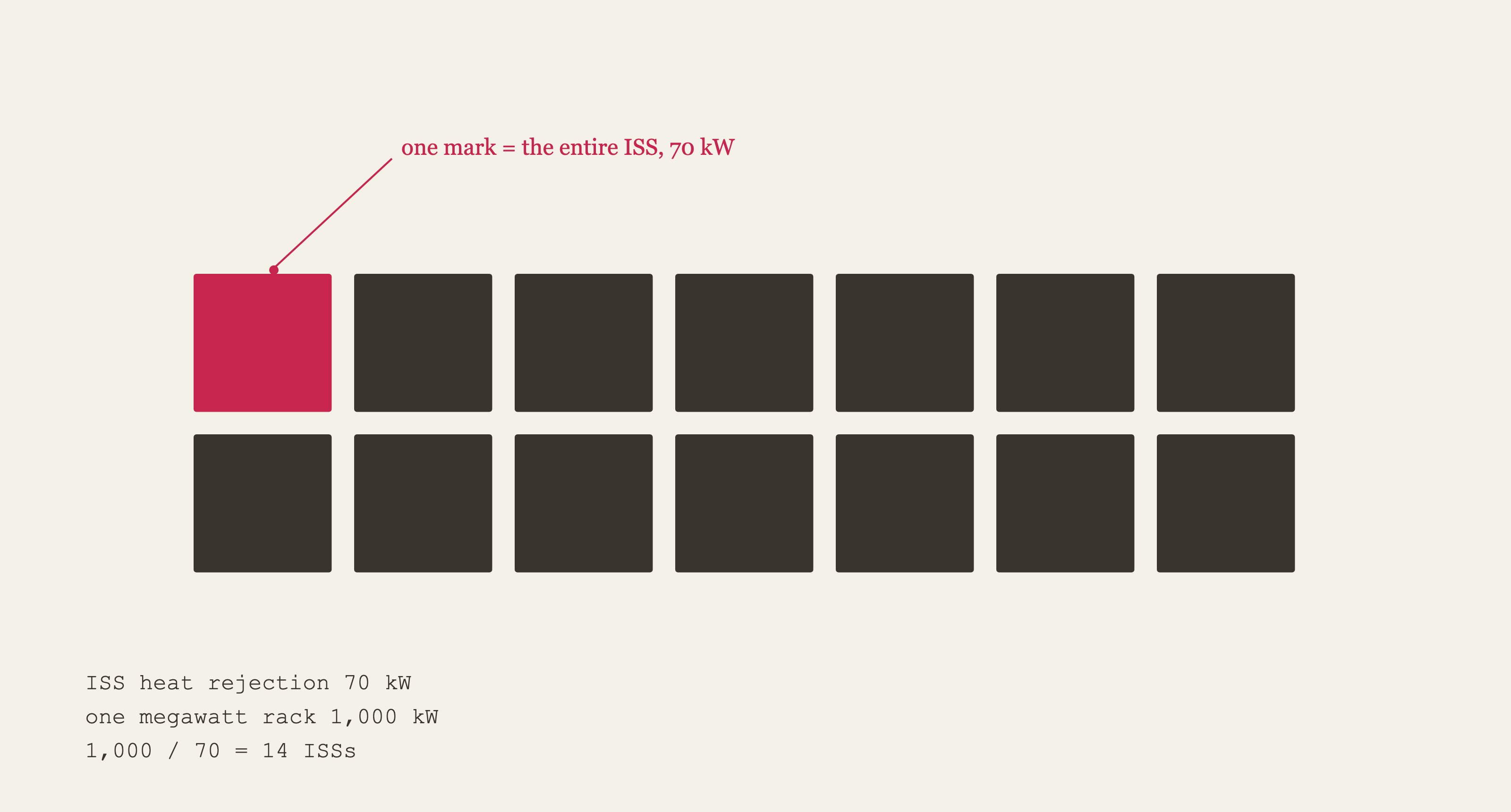
1 MW GPU Radiator Panel Size = ISS x 14
Something like this.
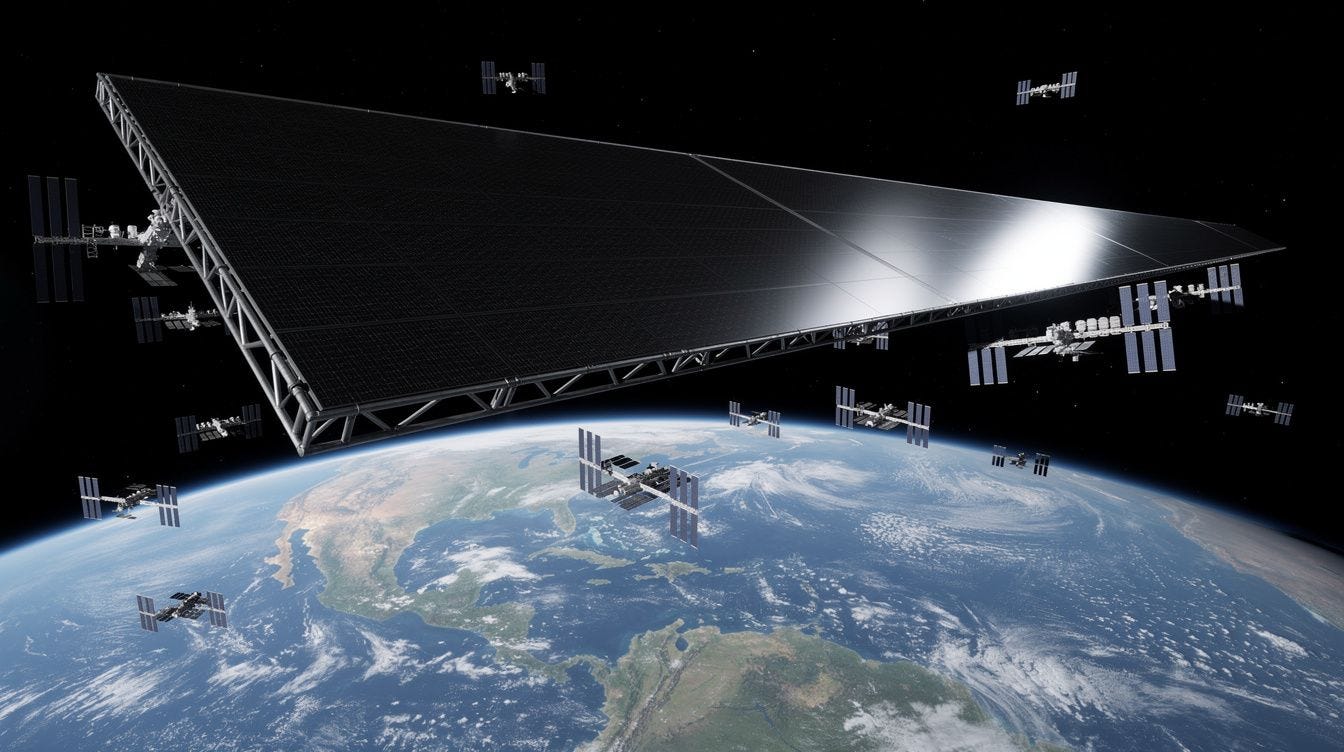
Surrounded by the huge amount of space junk already up there.
Space Junk Requests A Word
This is merely the low-earth-orbit (LEO) debris field. No other satellites, no ISS.
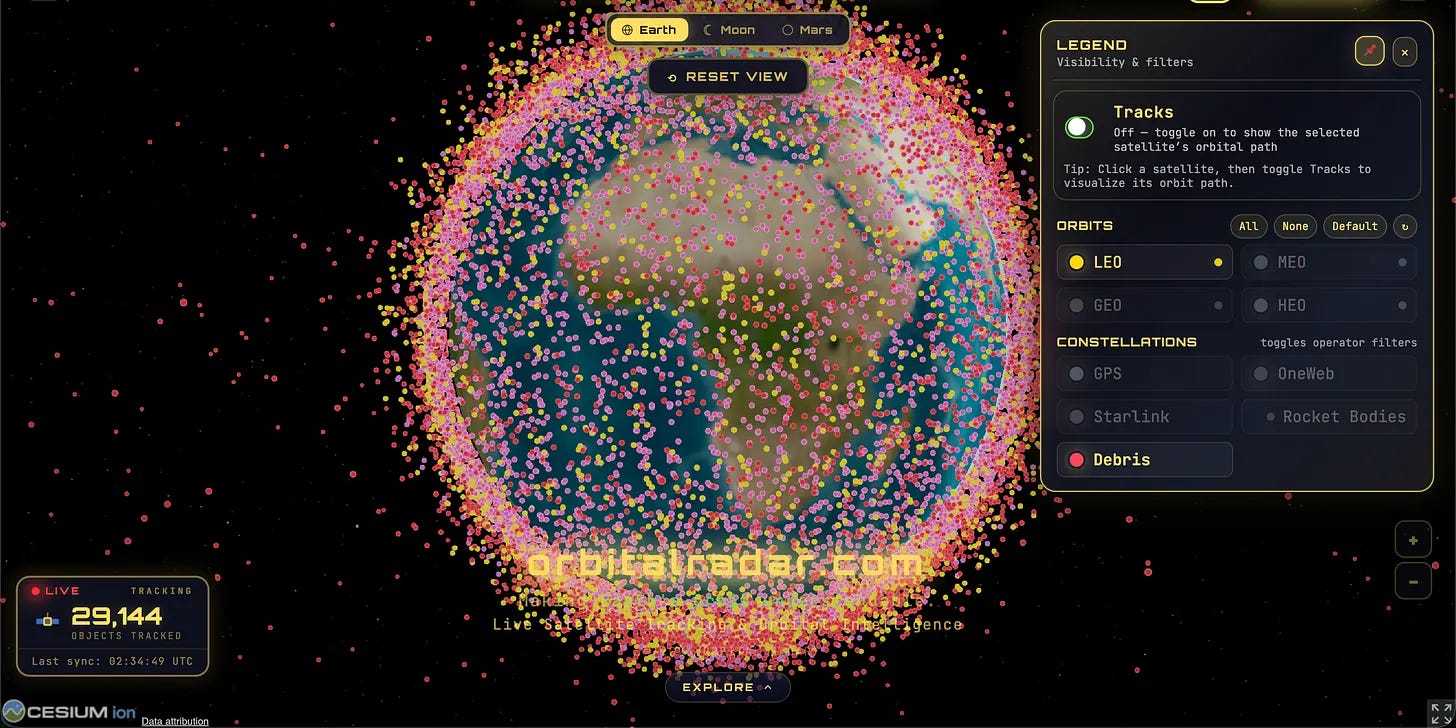
Even a sub-millimeter debris impact forces operational shutdown of cooling circuits. The ISS loses radiator capacity regularly and must operate at reduced thermal margin. It mitigates damage by re-positioning - but for a datacenter, re-positioning panels at such massive size would avoid little, while also likely messing up your datalink.
Technically, this might have solutions, but this same asshole also destroyed the USA’s federal agency system, with NASA facing existential budget cuts.
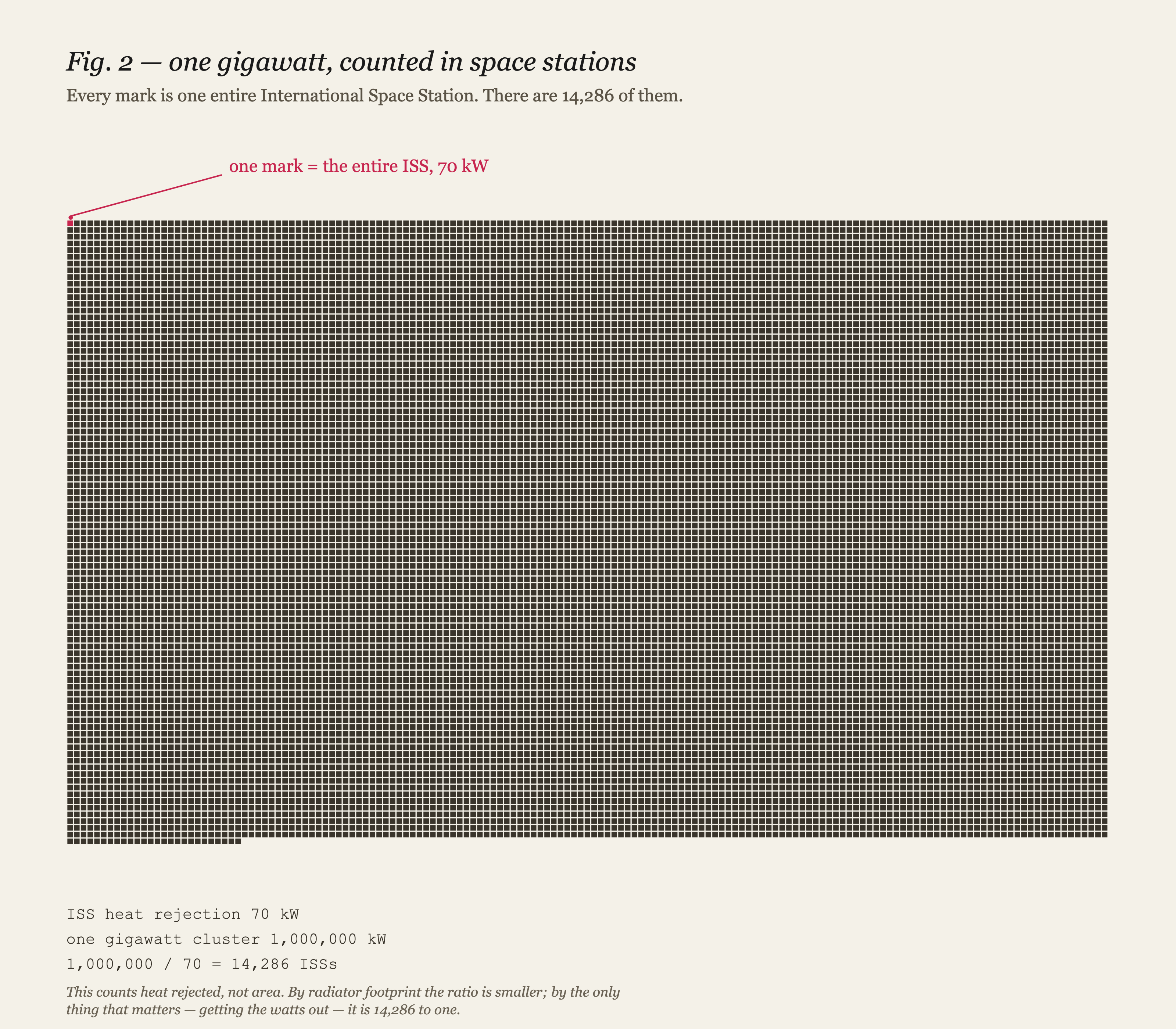
1 GW GPU Radiator Panel Size = ISS x 14,286
A gigawatt needs fourteen thousand.
(To reiterate: we’re going by the ISS because it is the best operating, proven system to-date, regarding heat transfer.)
This means a normal, boring, hyperscaler-sized cluster needs radiators measured in square kilometers.
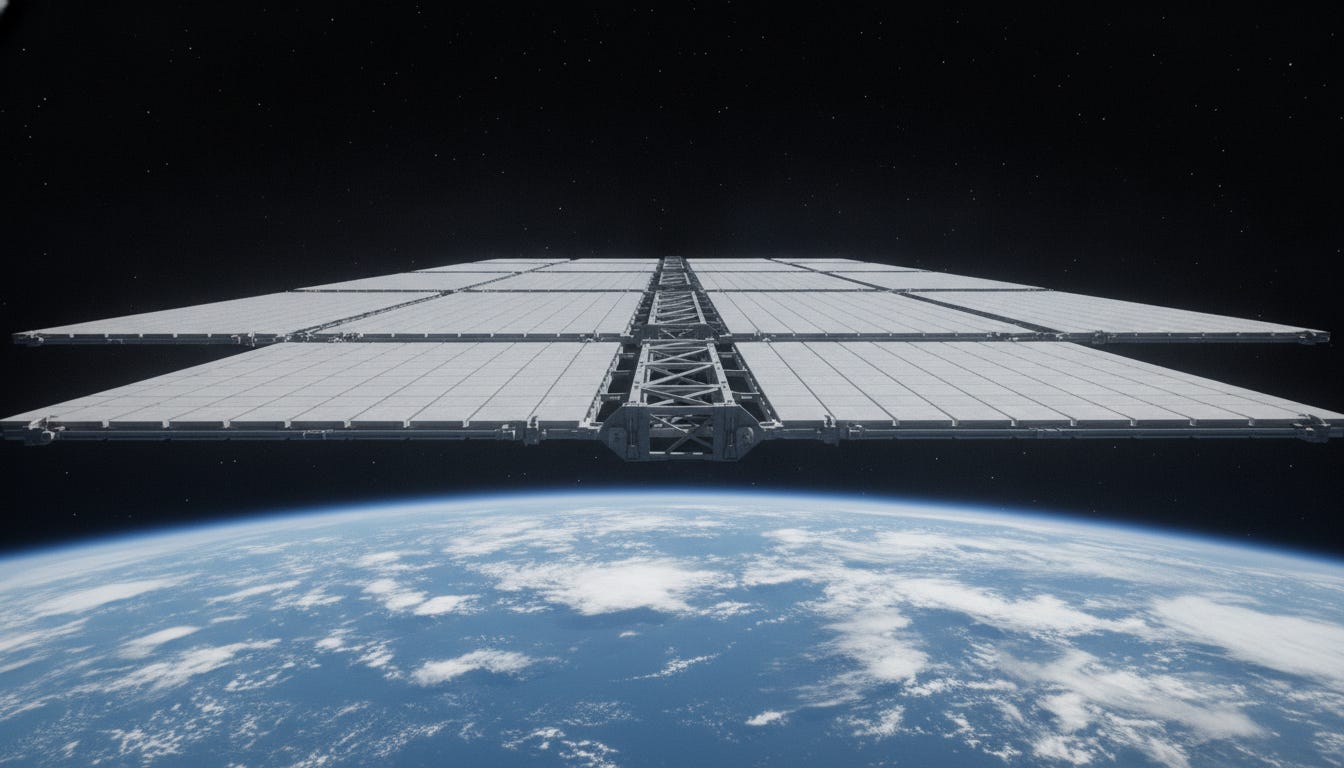
This is mathematical reality.
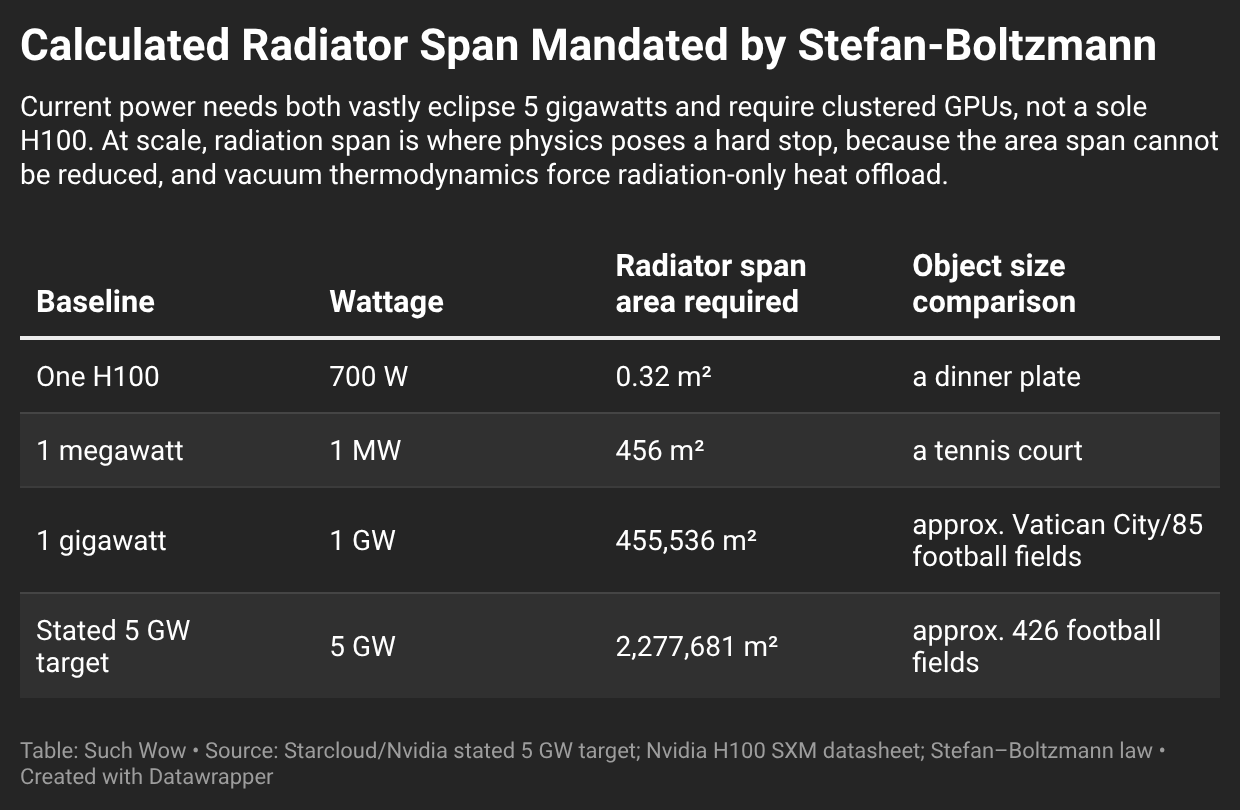
Current forecasts by the AI industry are that thousands of Earth-bound datacenters are already required for compute needs.
We’d have space for <10.
Recap: The 4 Pillar-Blockers
Any one of these is fatal at scale.
Solution: No, Not The Moon
Lunar data centers make everything 10x harder, and are bound by the same physics. Good for storage archive and little else.
(We could consider putting the data center at the bottom of the ocean instead - the anti-space, where the heat finally cooperates, and everything else goes wrong for more interesting reasons.)
1: Vacuum Insulation Means Cooling Is Radiation-Only
Discussed above.
2: Stefan-Boltzmann Law Makes Radiator Panels Irreducibly Enormous
Discussed above.
3: Cosmic Ionizing Radiation
Regarding quantum computing as a potential solution: nope. This, in fact, makes quantum computing IMPOSSIBLE.
Cosmic rays flip bits today, killing the chip outright over years.
What a cosmic ray actually does is dump energy that sets off a quasiparticle burst, producing errors correlated across the chip in both space and time. In space without an magnetosphere, everything is exposed to the far more destructive version flinging around huge nuclei up to the size of iron.
Not to mention that the cosmic ray bit-flipping means that data output can be extremely unreliable.
4: Silicon Stops Working If Overheated
Bonus:
Space Silicon Lags By Decades
If the uncooperative-elemental-temperature stuff above wasn’t enough, there is this:
The space-proven workhorse RAD750 is roughly a 1998 desktop that costs ~$200k a board.
Wrap your mostly-obsolete H100s in lead, and a cosmic ray shatters the lead into secondary shrapnel aimed inward. (See above.)
The shielding that actually works is about ten meters of water. You need to launch the atmosphere you left behind.
Constant Repair Requirements
I’ll give this one a pass and pretend we have magical fixup-robots. With other robots fixing them.
Data Transfer: Another Problem
Training means ten thousand chips acting as one machine. Not ten thousand GPUs doing homework side by side - one machine, trading something like seven terabits (!!) per second of copper via NVLink.
The best laser link ever flown between satellites carries about a hundred gigabits. Seventy times too slow, between platforms drifting apart, re-aiming beams to microradian precision. Then there are interference problems.
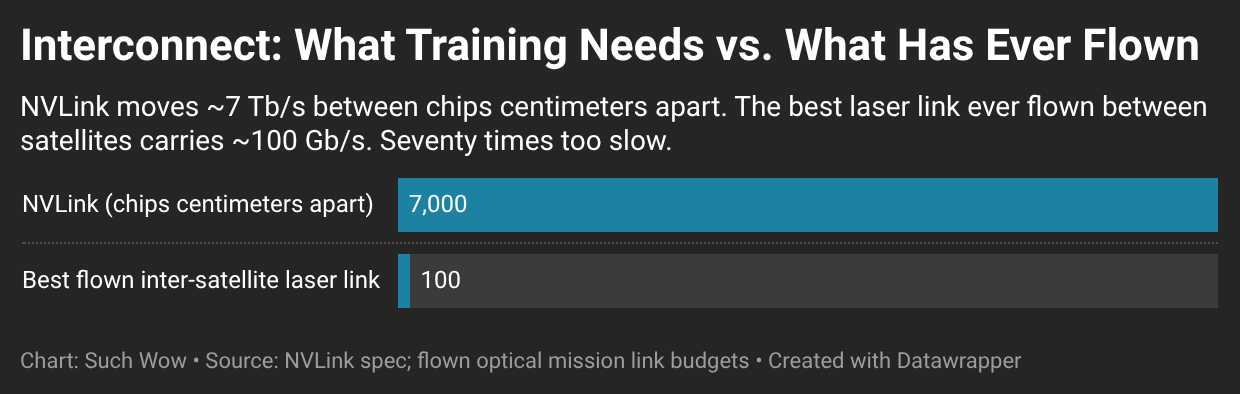
All you can actually build is a swarm of small computers with a terrible network, using the one topology AI training cannot, outputting highly-unreliable data from totally-obsolete models.
A Black Hole Is No Metaphor
The Accretion Disk
When a person gets rich enough, they stop selling their time for money. Instead, hey borrow against stock shares, living off the loan at a miniscule interest rate.
Inflate the valuation, borrow against the inflation, repeat. Growing, and growing, only growing - never releasing.
Collecting financial mass.
The Event Horizon
Something like 45% of the S&P 500 is now AI, as of April. A month later JPMorgan had the AI trade past half the index.
Your index fund stopped being diversified a while ago. Whatever the label says, it’s an AI position now.
Your 401(k) - the safe, boring thing you were told to set and forget, and often cannot choose even the structure of, is composed almost entirely of these exact index funds.
The timing was not an accident. In March, Nasdaq adopted a “Fast Entry” rule, effective May 1: any newly listed company big enough to rank in the top 40 of the index enters the Nasdaq-100 after fifteen trading sessions, allowing no review remotely robust enough to assess it faulty. It was even exempted from the usual seasoning and liquidity requirements!
Every index fund tracking that benchmark HAD to buy it. Not chose to. Had to.
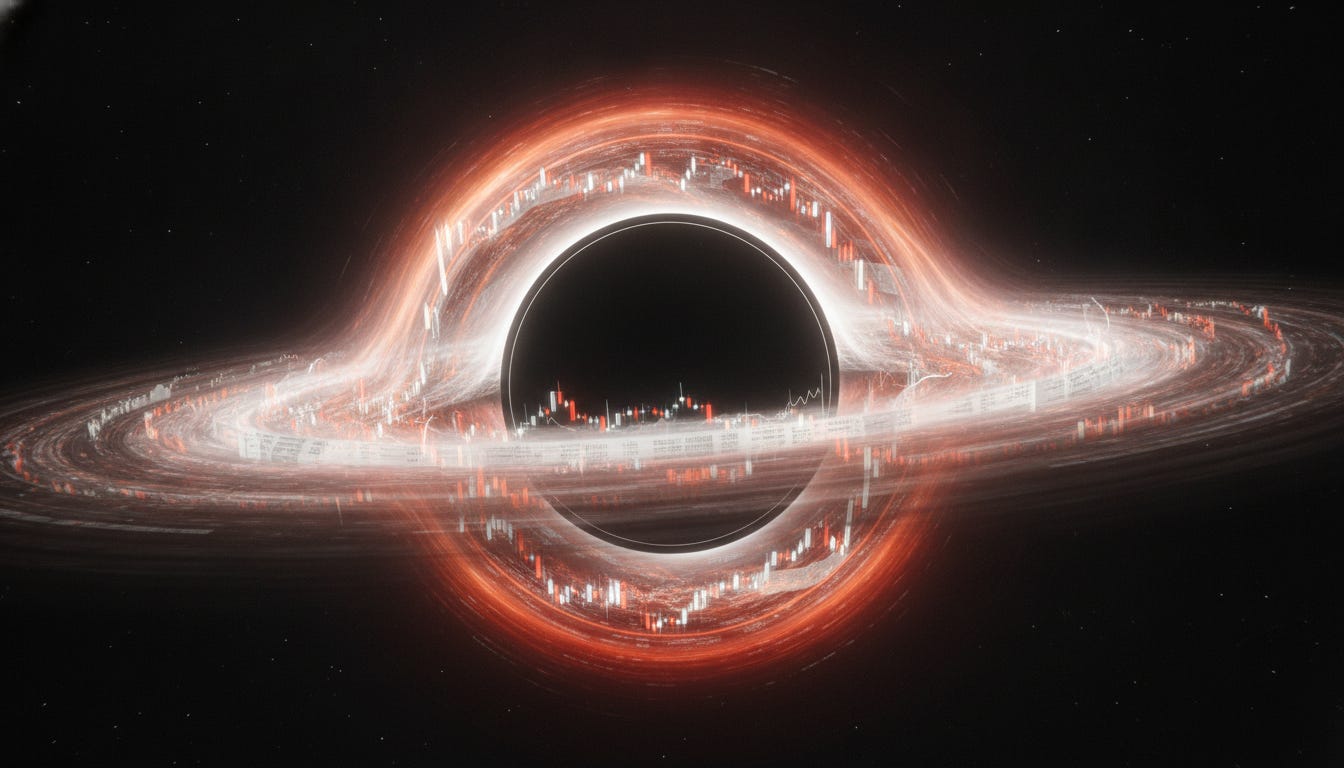
That’s how it got into your retirement account.
Past the event horizon, there is no known escape.
The Gravity Well Of Eternity
Not even light can escape a black hole. Our understanding of time…doesn’t exist there.
The mass at the center - the valuation both making Musk history’s first trillionaire and scaffolding the entire AI industry - rests on a machine that cannot exist, 4 different ways, each of them a 100% failure-state.
When it goes, it goes for everyone with market exposure. I don’t even think the billionaires will necessarily survive it, because the entire world knows exactly who to blame.
Retail Investors Are Suckers; Pro Traders Have FOMO
The SpaceX IPO was marketed upon the assumption that buyers would never bother to research either basic physics, notice the red flag of merging 3 failing companies into SpaceX, or notice the red flag(s)of the ludicrous terms:
Musk holds roughly 85% of the voting power on about 42% of the equity, through a super-voting share class. He is founder, CEO, CTO and chairman on listing day.
The SpaceX board of directors is merely theater. Not only that — SpaceX lists as a “controlled company” under Nasdaq rules, which formally exempts it from certain independent-director requirements.
The global market has been given to a madman.
The Good News
I didn’t spent time writing this to create fear and despair.
Financial survival during a market panic is (mostly) a matter of controlling your emotions; controlling your emotions during a market panic is known-impossible.
I am writing this because you have a much better chance of surviving a market panic if you see it coming. This was a crazy market, already. The Iran war-idiocy has multiple downstream affects both accelerating this scenario and making it far worse.
I’m less certain of making predictions, because the history book ends here. I am totally uncertain of my own future. That’s why I won’t even guess as to what asset class will be safe. Not even real estate is a sure thing in such conditions.
What I can say is that the more you prepare for something, the less scary it becomes. No, not obsession. The willingness to endure mild discomfort now to avoid catastrophic ruin later. A wee bit of CBT, if you will, because -
We’ve Been COMPLETELY Brainwashed
The idea that looking at beige drywall and screens all day is how we are supposed to live is a very-recent, abnormal idea. I’m not the culty go-touch-grass type, either.
But we all know something is wrong.
You cannot buy time, love, or memories. You are not your net worth. You are not your job.
We have been told for a long time that we would need to figure out how to re-value ourselves in an AI future. We are about to enter that era - whether we like it or not.
So here’s our chance to build a world that values us according to the things that matter. Not this post-industrial age work—>money→live bullshit making our lives miserable.
Also: AI development slows the hell down. (The solution is smaller/more efficient models, people!) A market crash at this level is the only forcing function capable of inducing that.
Consider this an everyone-alive character-building experience. Yes, it will suck, but it’s medicinal.
In the long run? This is the intervention that capitalist greed addiction requires for us not to speedrun self-extermination.
Temperature Is A Circle
This is the understanding you were expected to not have.
It turns out that there IS such a thing as a temperature described in negative Kelvin.
But being that zero kelvin is generally understood to be infinitely unreachable, turning the thermostat down to negative Kelvin is a binary flip. The “dial” metaphor stops working.
A system at negative Kelvin is not cold - it is hotter than any positive temperature imaginable; hotter than the surface of the sun, hotter than anything producing measurable heat.
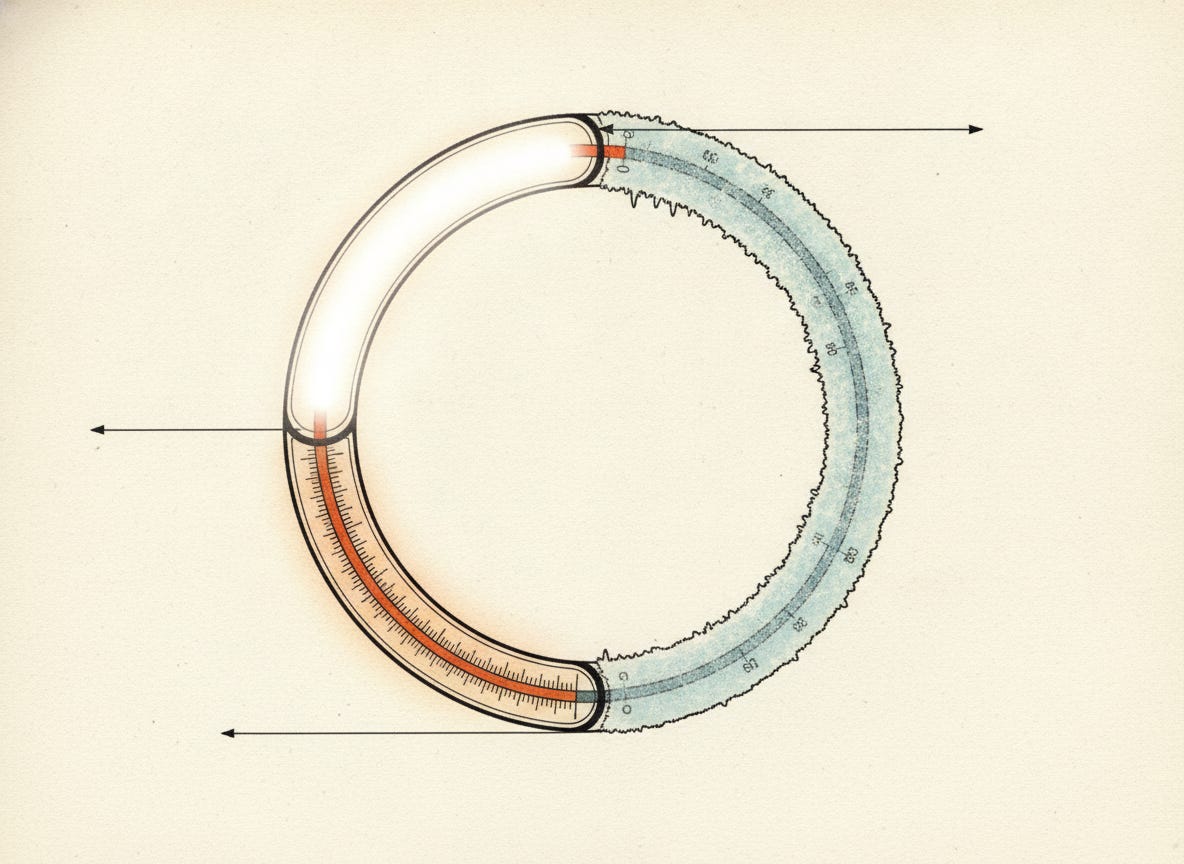
Unless you took the time to investigate the science, you’d never know.
Musk’s AI Demon: Himself
The multi-headed AI “demon” that 2013-era, once-partially-sane Musk solemnly warned the world not to summon has now possessed Musk long beyond redemption.
He’s it.